Thursday, February 25, 2010

Corte de Pelo

I really needed a haircut and I was getting a rash from my facial hair. Originally I thought this would be a useful cultural experience. I walked up the road and located a hairdresser (un peluquero) and was shocked to discover that it was only going to cost me six Bolivianos for a cut. I was at the right place.

Given my limited Spanish I resorted to pointing at the array of hairstyles displayed on the wall. The best I could find was a picture of a dude that looked like Brian Littrell from the Backstreet Boys. I pointed “esto” and hoped for the best (secretly hoping for the worst). She whipped out her scissors which were designed for fabric cutting and got to work. Each chop it sounded like newsprint being torn, against-the-grain, in half. This was definitely going to plan.

Five to ten minutes later and she was finished. I paid my six Bolivianos (half expecting the price to have increased), waved goodbye to senora and smiled at the mammarifous Cochabambina unabashedly breastfeeding in the doorway and headed home.
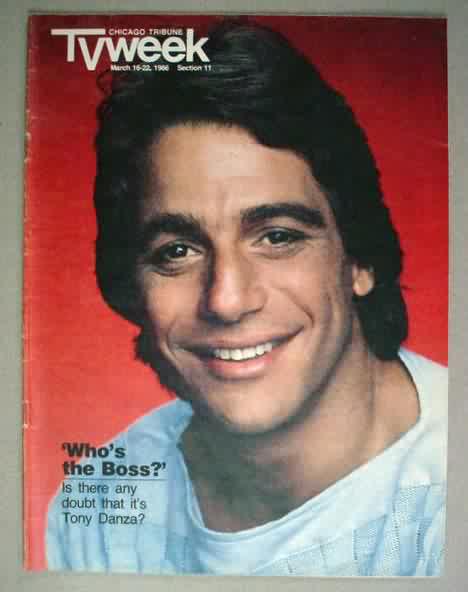
All I can say was this whole experience was entirely harmless. There was no egregiously bad haircut, ripping off the gringo, 30 minute wait next to a sweaty truck driver or blood. Just a quick, cheap, innocuous, better-than-mediocre (for the price) haircut that only disappointed insofar as it did not make me look like Who’s the Boss era Tony Danza. Wadaimiss?


Friday, February 19, 2010

Festive season in Bolivia

Globos

So what have I been up to since concluding my responsibilities as a middle manager? The short answer is I have been throwing water balloons. In transit to a new abode Sarah and my eyes were as big as saucers looking at all of the people, young and old, who had taken to the streets to throw globos, buckets of water and shoot water pistols or garden hoses. On major streets there were dozens and dozens of chico's in a relentless skirmish with an equal number on the opposite side. Water projectiles flying continuously. But not only that. Small mobs also haunted the back streets of suburbs and the streets of the inner city while pick-ups and other kinds of flatbed trucks toured the city saturating anyone who comes into view (not unlike an innocuous re-enactment of The Road Warrior). It was all-out (water) war.


In this environment it is difficult to not start participating yourself. Late on Sunday afternoon, the day after the Oruro Carnival, a group of dudes (pictured below) stopped in a pick-up across from the hostel we were at. Having been saturated on numerous occasions (while taking care of simple, quotidian business no less) we finally got with the programme and bought some of our own water balloons. My initial attempt to ambush them was a waste of time and soon it was three against one (though with me in the more desirable, elevated, position).


Now with some experience up my sleeve I look forward to the weekend in Cochabamba where Cochabambino’s have their festival. It will be more of the same.

Oruro Carnival

Oruro Carnival is the kind of thing you read a lot about before you come to Bolivia. In this respect I must admit I was not expecting much (cf. touring the Uyuni salt plains). This curmudgeon perspective was completely unfounded. The Carnival itself is simply brilliant and Sarah and I were incredibly lucky to have attended in 2010. The parade is every bit as spectacular as the guide books suggest.


As fate would have it when we went to book our Spanish lessons through Sustainable Bolivia the director there graciously offered us the opportunity to go with their group. Thank you very much Eric. We got a place to stay and a great stand for a painless 300 Bolivianos.

In fact the only painful part of the carnival was when I almost flaked out in the morning of Carnival. My eyes rolled back in my head, the whole bit. That morning I had only one beer and a bowl of muesli so the cause is difficult to diagnose. Sarah, of course, came to my rescue and nursed me through the midday and I was back on board by the afternoon. Not before projectile vomiting twice in a random Oruro street and sleeping for over an hour, though.


Having now been I cannot recommend this experience enough. Being amongst the colour, noise, energy, spectacle and fun. The dancers with amazing costumes (masks, props, fireworks, cranial flamethrowers, fuzzy “bear” suits) and their joy in performing. Everyone in the middle of a perpetual water fight, the beautiful day, drinking beer and enjoying the company of a new group of very amiable people. This will be a highlight for the year, no question.

Tuesday, February 9, 2010

Stencils in Sucre and Cochabamba

Having spent a bit more time walking the streets of Sucre and now Cochabamba I have started observing the graffiti closely. It is one of the benefits of staying in the same place for a while. In Bolivia there is a lot of black, blue and white paint used to support Evo Morales political party Movement Towards Socialism (MAS). These slogans can be seen, ubiquitously, in both obscure campesino hills and throughout the streets of a major cities (though less in the Media Luna area, of course). It is notable that I first thought the painted MAS slogans were guerrilla efforts. It soon became clear that these were is actually a tactic used by Morales. A very organised, "hecho a mano" (handmade), approach to political branding.


Besides the MAS paint jobs there is a lot of graffiti more generally. It is everywhere. Refreshingly I can say that the majority of it is not inspired by the New York “graf” style. Instead it is a mixture of spray-painted slogans (which are brazen and graphically unimaginative) and stencils. Both are found on the walls of both back streets and main streets. I should underscore that this is based on observations made in Sucre and Cochabamba only. Slogans, I would hazard a guess, out-number stencils about twenty to one.


Because there is so much graffiti about the place it would be to much to document it all at once. Therefore, when Sarah and I did a big circuit of the city for purposes of orientation and administration I decided to capture images of stencils (only). I was amazed when I got home. I had amassed about 59 images in total. Stencilling is a lot bigger here than I imagined.

In comparison to slogans the stencils here are slightly more furtive. They hide in corners of buildings and indiscriminate walls. There is a broad amount of content, too. Maybe it is the iconic nature of stencils that has opened up different types of expression in comparison to the usual political, Ebonics or “Jenny-Heart-John” type messages. Whatever the reason it is conspicuous that there is a wide range of flavours on offer.

To make sense of the spectrum of stencils I have attempted to create three categories to classify what is around these two towns. The first is the easy (and not so important) category of “municipal” and “commercial” stencils. Ones which actually have a homemade/handmade feel but are actually put there by the city or private interests.


The second category, equally obvious in a country that has had 188 changes of government in its 500 year history, is “political” stencils. These cover pieces by both activist and political party.


The final category is stencils that are “idiosyncratic" or of "unknown origin." This last category is a little broad and does lead to some overlap with the two aforementioned. Personally I am still trying figure out which I like better: political or idiosyncratic. The former seems more authentic but the latter signals a country that has a distinct youth culture separate from its previous generations.


When you travel there can be a sense that there is not a lot of order. Now that I compile this list I realise that this exercise, this need for categorisation, might be to sate my need for order just as much as the need to look at things for aesthetic pleasure. In any instance I think that looking at this use of public space is a handy way to get a feel for a city and this country. The combination of the amateurish municipal signs, the strong political flavour of Bolivia mixed with a new, contemporary expression in stencils is something that I look forward to reflecting on and seeing more of in my coming travels.

Click here to see a Photobucket slideshow or here for a Facebook collection of the 59 stencils.

Wednesday, February 3, 2010

Current Events Bolivia

Worth checking is the Bolivia Weekly blog that highlights stories from the week and also has a Podcast. BW also has a link to Inform that, as Sarah puts it, aggregates Bolivian news story's from around the world. This was a great find for us as it has been "muy difícil" finding current events about Bolivian in English.

Birthday for The Cheetah

Truth be told it is a little stressful organising your girlfriends birthday when you are miles away from home. There was no where to hide, her birthday would sink or swim based on what I managed to put together (i.e. it was just me and her, no birthday bash with the gang to lift her up). Lucky for me it all went well.

For me the day was all about fundamentals, nothing fancy. An approach that has been reinforced in preceding years through basketball; get the basics right and "luck" should find you.


Her birthday technically started on 01.02.2010 (given the time zones), so I organized to take Sarah to the documentary The Devils Miner on Monday, something which she had wanted to see for weeks. That night I made a list, split the following day into three parts, and hoped for the best.

La Mañana


On the morning of 02.02.2010 it was fresh flowers from Macardo Central, breakfast in bed and a card. As we ate our porridge with cinnamon, apple and strawberries we noticed that it was a killer day outside. It was perhaps the best day Sucre had seen in two weeks.

El Día

The next part of the day was the "surprise" activity of horse trekking. Sarah had wanted to do this for years so it was a great way to spend the day. We both got a little burnt, and Sarah´s horse was old and stroppy (it literally bit the ass of another horse at one point) but the quality of the surrounds and the guide we had made for a perfect day.


La Noche

In the evening we had dinner with the perennially gracious Ali and Sam (a UK couple we have met at our hostel). We ate at a Chinese place. When ordering we got excited about eating tofu for the first time in months and then were quickly told "No tengo tofu." Despite this the food was great, consistent with the company. On return to the hostel I brought out a mini-cake and sung her happy birthday (the cakes in Bolivia would be perfect for a Jean Baudrillard essay, they look like they have been modelled on cartoon images). Sarah had a genuine smile on her face at the end of all this which was a big relief.

Thank you Bolivia for being so pretty and thank you basketball for teaching me about fundamentals.


Friday, January 29, 2010

Leak

Brass bands (banda de música) are a big feature here in Sucre. I was disturbed by one of these while in my room just the other day: a rag-tag group of gentlemen, not wearing any kind of distinguishable uniform as is customary.

People were throwing buckets of water out third story windows as they stumbled drunkenly down the street playing your standard marching band tune, albeit intermittently. I took a quick snap of these guys as they passed by. It was not until I reviewed the photo that I caught of what else was going on in the street. A moment not unlike that which David Hemmings experience's in Blow Up, you might say.


Sunday, January 24, 2010

Getting grifted in Potosi

I say grifted because it sounds more romantic. As I said before Sarah and I had been feeling sick and grumpy when we arrived in Potosi, and this was the shortest bus ride we had been on since arriving on this continent (a meagre three hours). The town was brown, brown, brown and grey. The odious and very infamous Cero Rico (the cause of millions and millions of Bolivian deaths over the last 500 hundred years) loomed in the background.


When we got off our bus a greasy, round-faced man with the moustache of a fifteen year old boy and a grey puffer jacket that looked like a throwback from the mid-eighties (the kind of jacket I have always associated with the Hardy Boys, God knows why) greeted us and asked if we wanted a taxi. We said “no” and ignored him as he followed us around the bus. After we had our bags safely secured (they just chucked them off the bus and left them on the ground) the same guy was still asking us if we wanted a taxi. I flagged to Sarah that we should go with this guy and she, not so confidently, agreed to follow.

Once at the taxi Sarah was not feeling so great about the prospect of going with this driver. She asked me to check if there was a proper taxi sign on the front (which I did) but by then I had already given him my bag and was not in any mood to be getting caught up in details. All I wanted to do was get to the hostel. As far as I was concerned this was just like all the other beat-up pieces-of-shit we had travelled in since being in Bolivia. So what difference does it make? This is a developing country after all. As such we cannot go around pushing our white middle-class, eurocentric view onto everything. These are poor people trying to make a living. Give the guy a break.

About ten metres after we departed we suddenly had a new passenger in the taxi with us. A smiling South American man who claimed he wanted to travel with us to a hostel as he too was a backpacker. He grinned away, from ear-to-ear, and did his best to be affable despite the language barrier. He was wearing a blue jacket, round spectacles and looked “clean and respectable.” Truth be told, it was at this stage that Sarah and I both new we were in trouble but our packs were in the boot and there was little we could do. Neither of us said anything to each other or the driver. Just one nervous glance to the effect of “what the fuck.”

Finally another ten metres down the road a man in a Police uniform came out of nowhere, slowed the car down and asked to see the drivers papers. A second later he was in the car going through what can only be described as a well rehearsed routine designed to shake us up and disorientate us. As we drove of the “Police Officer” asserted his authority on us. He checked our passports scrupulously and then proceeded to search us for drugs, checking for chalk marks on our arms and rifling through all our stuff (including the bag of our colleague with a shit-eating-grin). Through this process we were dumbstruck. Our stuff was being taken out of our bags and then being handed back to us (a confidence move by our men if ever there was one). He would then shout “drogas” and a variety of other things before then going back into our bags to search further. Meanwhile the driver, quiet and unassuming the whole time, took us to some quiet back streets (though we had not noticed and had no idea where we were going anyway, having never been to Potosi). Blue jacket, shit-eating-grin guy played along, keeping proceedings calm with his amiable insistance of “tranquilla” (be cool) and his backing up of the “Police Officer” as a bonafide lawman.


By the end of it Sarah was starting to get pretty upset and then suddenly it was over. The driver had stopped and taken our bags from the boot and, very preciously, placed them up on a wall next to the car. We were free to go and the “Police Officer” had given all our stuff back. We were both so relieved to be out of the car.

Once out they were gone in a second, the street was silent and we stood staring at each other before both letting out a series of expletives. What just happened? They did not take anything. Or did they? Somehow all the shouting and disorientation had worked perfectly. We were now missing an Ipod, our camera and 700 Bolivianos. I had even checked the camera was still with in my bag minutes before exiting the taxi, I thought I had it covered. I didn´t.

The classic thing about this whole episode was that just days before we had spent an entire morning talking with a very lovely English couple about various scams and how quickly these things happen. We debated at length the need to be on guard, but not so on guard as to ruin your whole trip with paranoia. The wisdom from that conversation was clearly lost on me very quickly.
It is also ironic given my past line of work: you would not be blamed for thinking that I should have better presence of mind and/or judgement of character. Looks like the jokes on me this time. At least I have now had some of my naivete knocked out of me. In the final analysis neither Sarah nor myself were physically harmed and truth be told we will now be better travellers for this experience. You do have to be cautious, you do have employ strategies to safe guard yourself. Thanks for the wake up call Potosi.